
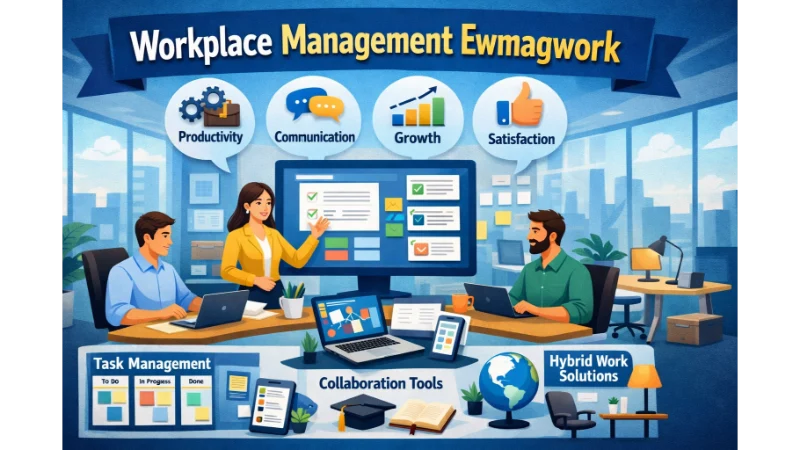
Workplaces have changed a lot over the years. Technology, hybrid teams, and global competition have reshaped how companies operate. In this environment, workplace management ewmagwork has become an important concept for organizations that want to improve productivity, communication, and employee satisfaction.
Companies that understand proper workplace structure often see better teamwork and stronger results. Leaders now focus on systems that balance people, processes, and technology. This approach allows businesses to operate smoothly while supporting employees in their daily tasks. This guide explains the core ideas behind workplace management ewmagwork, including strategies, benefits, and practical implementation steps.
What Is Workplace Management Ewmagwork?
At its core, workplace management ewmagwork refers to the systems and strategies used to organize employees, workspaces, tools, and workflows. The goal is simple. Create an efficient environment where teams can perform their duties with clarity and purpose.
Effective workplace management usually includes:
- Clear communication channels
- Defined roles and responsibilities
- Smart workspace organization
- Digital tools for collaboration
- Strong leadership and culture
When these elements work together, employees experience fewer obstacles and greater motivation.
Why Workplace Management Matters Today
Modern organizations deal with remote teams, digital platforms, and fast decision cycles. Without proper structure, confusion can quickly appear. That is why workplace management ewmagwork plays a vital role in today’s companies.
Key reasons include:
1. Improved Productivity
Employees perform better when processes are clear. Organized workflows reduce wasted time.
2. Better Communication
Good management systems create clear channels for discussion and updates.
3. Higher Employee Satisfaction
People feel comfortable when expectations and tools are well defined.
4. Stronger Company Culture
A structured workplace supports teamwork and shared goals.
Core Components of Workplace Management
Successful implementation of workplace management ewmagwork relies on several core components.
Workspace Organization
The physical or digital environment should support focus and collaboration. Comfortable desks, meeting rooms, and digital platforms help employees perform efficiently.
Technology Integration
Modern companies rely on project management software, cloud storage, and communication tools.
Examples include:
- Slack for messaging
- Trello for project tracking
- Google Workspace for collaboration
These tools simplify workflows and reduce confusion.
Employee Engagement
Engaged workers contribute ideas and stay motivated. Managers must encourage participation and recognize achievements.
Leadership and Decision Making
Strong leadership keeps teams aligned. Managers should set clear goals and provide guidance without micromanaging.
Key Strategies for Effective Workplace Management
Companies looking to improve workplace management ewmagwork should adopt practical strategies that support employees and business goals.
Create Clear Workflows
Each employee must understand their role in the workflow. Clear instructions prevent mistakes and delays.
Encourage Open Communication
Teams should feel comfortable sharing ideas or concerns. Regular meetings and feedback sessions help maintain transparency.
Invest in Training
Employees need continuous learning to adapt to new tools and responsibilities.
Use Performance Metrics
Tracking productivity and progress helps managers identify strengths and improvement areas.
Workplace Management Methods Comparison
Different management styles exist. Each approach has advantages depending on the company structure.
| Management Style | Key Features | Best For | Challenges |
|---|---|---|---|
| Traditional Management | Hierarchical structure | Large corporations | Slow decision making |
| Agile Management | Flexible and adaptive | Tech teams | Requires constant coordination |
| Remote Workplace Management | Digital communication | Distributed teams | Communication gaps |
| Hybrid Management | Mix of office and remote | Modern companies | Scheduling complexity |
Many organizations adopt hybrid approaches to balance flexibility and control.
Benefits of Workplace Management Systems
Implementing workplace management ewmagwork can bring several long-term benefits.
Increased Efficiency
Employees waste less time searching for information or clarifying tasks.
Better Collaboration
Teams work together more smoothly when systems guide communication.
Reduced Stress
Clear expectations reduce workplace pressure.
Stronger Business Growth
Efficient operations often lead to higher profits and faster expansion.
Challenges in Workplace Management
Despite its benefits, organizations sometimes struggle with implementation.
Resistance to Change
Employees may hesitate to adopt new systems.
Technology Overload
Too many tools can confuse workers instead of helping them.
Poor Leadership Alignment
Managers must support the strategy consistently.
Organizations should introduce changes gradually and provide proper training.
Pros and Cons of Workplace Management Systems
Understanding both sides helps leaders make better decisions.
Pros
- Improves productivity
- Strengthens communication
- Encourages teamwork
- Helps track performance
- Supports long-term business growth
Cons
- Requires training and adjustment
- Implementation may take time
- Some employees resist structured systems
Steps to Implement Workplace Management Successfully
Organizations that want to adopt workplace management ewmagwork can follow a practical approach.
Step 1: Assess Current Workplace Structure
Identify gaps in communication, workflow, and tools.
Step 2: Define Goals
Set clear objectives such as productivity improvement or better collaboration.
Step 3: Select the Right Tools
Choose software and systems that match your team’s needs.
Step 4: Train Employees
Provide guidance so workers feel confident using new processes.
Step 5: Monitor and Improve
Review results regularly and adjust strategies when necessary.
The Future of Workplace Management
Workplace management continues to evolve. Artificial intelligence, automation, and remote work trends will influence how companies operate.
Forward-thinking organizations will combine traditional leadership values with modern technology. Businesses that embrace balanced strategies often build stronger teams and sustainable growth.
This evolving approach highlights the ongoing importance of workplace management ewmagwork in shaping efficient and supportive work environments.
Conclusion
Strong workplace systems create clarity, stability, and motivation for employees. Companies that invest in proper organization often experience higher productivity and better collaboration. The concept of workplace management ewmagwork focuses on balancing people, processes, and technology. When applied correctly, it supports both employee wellbeing and company success. Organizations that follow structured management practices can adapt to modern challenges while maintaining reliable workplace traditions. Visit my site.
Frequently Asked Questions
1. What does workplace management ewmagwork mean?
It refers to strategies and systems used to organize employees, workspaces, and workflows for better productivity.
2. Why is workplace management important?
It improves efficiency, communication, and employee satisfaction in modern organizations.
3. What tools support workplace management?
Popular tools include project management platforms, communication software, and cloud collaboration systems.
4. Can small businesses use workplace management systems?
Yes. Even small teams benefit from organized workflows and clear communication.
5. What challenges occur in workplace management?
Common issues include resistance to change, poor training, and excessive reliance on technology.
6. How can companies improve workplace management?
They can assess current systems, implement better tools, train employees, and review progress regularly.